Yikes! Why are Computers So Expensive Now?
Published by DTC Today | February 2026 | Managed IT · Cybersecurity · Hardware Planning
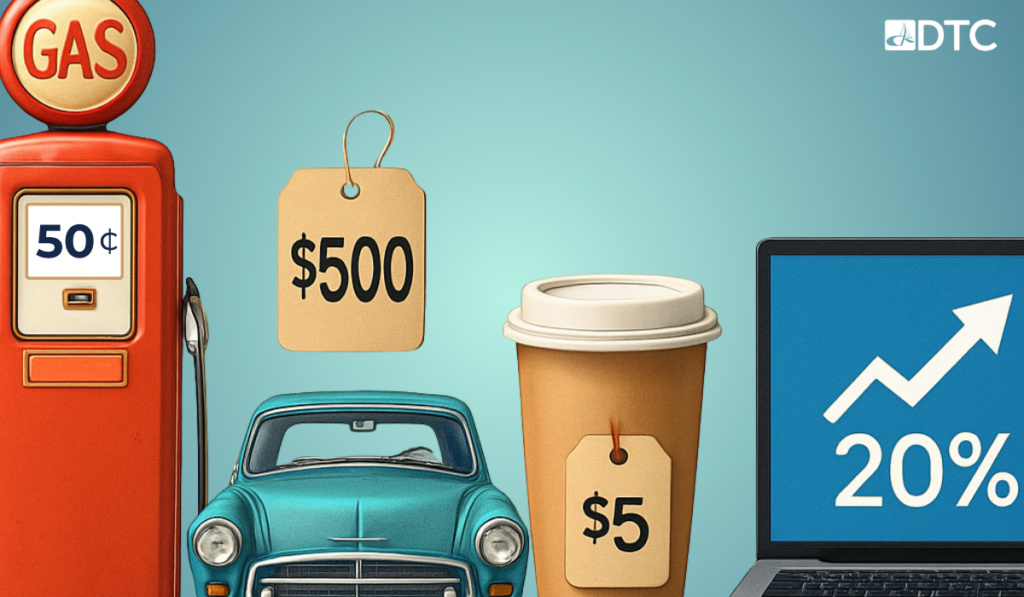
Gas isn’t 50 cents. Your gym teacher’s car isn’t $500. And that laptop you’ve been meaning to replace? It just got more expensive too — and not by a little. Dell and Lenovo both raised prices up to 20% going into 2026, and if your IT budget was built on last year’s numbers, you’re already behind. Yes. Computers just got way more expensive in 2026.
But, rather than let you find out when you get a quote and do a double take, we want to break it all down for you in plain English. What’s driving this, how long it’ll last, and what smart businesses are doing right now to stay ahead of it.
So, why are computers so much more expensive?
The short version: AI is eating the world’s memory chips, and the rest of us are paying for it.
Here’s the longer version. AI data centers — operated by giants like OpenAI, Google, and Microsoft — require enormous amounts of a component called DRAM (Dynamic Random-Access Memory). The same memory that goes into your office laptop also powers AI servers, and right now, data centers are consuming it at an unprecedented scale.
The result? DRAM prices have surged over 170% year-over-year, with some components spiking even higher. Dell COO Jeff Clarke said during an earnings call that he’s “never seen memory-chip costs rise this fast”— and this is a man who’s been in the industry for decades. Tom’s Hardware reported that it extends beyond just memory — NAND (storage), hard drives, and components across the semiconductor supply chain are all affected.
As the raw materials to build a computer are getting more expensive, the manufacturers pass those costs on. Which means you pay more.
What Dell and Lenovo Have Announced
This isn’t speculation. Both major manufacturers have already acted:
Dell implemented price increases of 15–20% beginning in mid-December 2025. TrendForce’s industry analysis confirmed the increases and noted that Dell’s own internal warnings told customers that ordering for future delivery does not lock in current pricing.
Lenovo invalidated all existing customer quotes as of January 1, 2026, and has since sent additional warnings to partners about further price hikes coming in March 2026. Tom’s Hardware covered Lenovo’s most recent partner letter, noting that any orders received before February 28 but not shipped by March 31 will require repricing. In other words, even orders already placed aren’t safe.
TrendForce is also forecasting that PC DRAM prices will rise an additional 105–110% in Q1 2026 alone — the steepest increase of any technology category.
HP, Acer, Samsung, and LG are all following suit. This is industry-wide.
What Does This Mean in Real Dollars?
Let’s make it concrete. These aren’t abstract percentages — they show up in your budget:
- A server configuration that cost $10,000 last year could run $11,500–$12,000 today
- A batch of 20 business laptops that would’ve been $30,000 may now cost $33,000–$36,000
- Hardware refresh cycles that were already in your 2026 plan could consume 15–20% more of your IT budget than you allocated
For dental practices, healthcare organizations, and small-to-mid-sized businesses that were planning to upgrade aging equipment this year, this is significant. Industry analyst firm i-Tech Support notes that servers and professional workstations with high RAM requirements are getting hit hardest — which matters a lot if you’re running an EHR system, a practice management platform, or any kind of database server.
How Long Will This Last?
We wish we had good news here. The honest answer is: the whole computers getting more expensive in 2026 thing… isn’t a short-term blip.
Memory manufacturers are investing in new production facilities, but building chip fabs takes years. PC Gamer and industry analysts suggest that meaningful relief on DRAM pricing is unlikely before 2027–2028, if then.
In the meantime, AI demand isn’t slowing down. Digital Boardwalk’s analysis notes that AI data centers could consume roughly 70% of high-end memory supply in 2026. That leaves the remaining 30% for everyone else — every business, every consumer, every school. Small businesses, as always, are at the back of the priority line.
What Smart Businesses Are Doing Right Now
Here’s the good news: you’re not helpless. There are real, practical steps you can take to protect your budget and operations.
- Accelerate Planned Purchases
If you have hardware refreshes planned for the second half of 2026, move them up. Prices are higher today than they were six months ago — but they’re lower than they may be six months from now. Waiting costs money.
- Lock In Quotes Quickly — And Read the Fine Print
Manufacturer quotes are expiring faster than ever. Lenovo has shortened server quote validity to as little as 14 days. If you receive a quote, don’t sit on it. And be aware: as Dell’s own warnings stated, placing an order doesn’t necessarily lock in pricing if it hasn’t shipped.
- Explore Device-as-a-Service (DaaS) Models
Rather than purchasing hardware outright, DaaS models let you spread costs over time — often with maintenance included. In a volatile pricing environment, predictable monthly costs can be a significant advantage. This is something we can help you evaluate based on your specific situation.
- Extend Equipment Life Where You Can
That three-year laptop refresh cycle might stretch to four or five years for machines that are still performing well. Linkenheimer CPA’s 2026 hardware guide recommends reviewing whether your assets have functional life remaining before replacing purely on schedule. A fully depreciated laptop may still have productive years left.
- Build a 15–20% Contingency Into Your IT Budget
If your 2026 IT budget was built on 2024 or 2025 pricing assumptions, revise it. IT Vortex recommends treating hardware pricing as a moving target and reviewing quotes more frequently rather than annually.
- Talk to Your IT Partner Before Making Any Purchases
This is where we can genuinely help. We monitor pricing trends, maintain vendor relationships, and can advise on timing, configuration, and whether a purchase makes sense right now versus waiting — or whether there’s a cloud or virtualization alternative that reduces your hardware dependency altogether.
A Note from DTC Today
At DTC, we’ve been making IT work for Delmarva businesses since 1999. We’ve seen chip shortages, supply chain disruptions, and technology upheavals before — and we’ve always helped our clients navigate them without panic and without overpaying.
The current hardware market is genuinely challenging. Yes – computers have become dramatically more expensive in 2026 We won’t sugarcoat that. But it’s also manageable with the right planning and the right partner.
If you’re unsure how these price increases affect your specific equipment needs, upcoming refresh cycles, or 2026 IT budget — let’s talk. That’s exactly what we’re here for.
No hard sell. Just honest advice about what makes sense for your business.
📞 Call us at 410.877.3625 ✉️ sales@dtctoday.com 🌐 Schedule a free assessment at dtctoday.com/contact
Sources & Further Reading
- TrendForce: Memory Crunch Hits PCs — Dell Hikes Prices 15–20%, Lenovo from January 2026
- TrendForce: Lenovo Signals March Price Hikes on Select Commercial Devices
- Tom’s Hardware: Dell and Lenovo Set to Increase Server and PC Costs by as Much as 15%
- Tom’s Hardware: Lenovo Alerts Partners to Looming Price Hikes on Consumer and Server Products
- NotebookCheck: Dell Raises PC Prices by up to 20% as Lenovo Warns of January Hikes
- i-Tech Support: Hardware Prices Are Surging — What IT Leaders Need to Know About the 2026 Memory Crisis
- Digital Boardwalk: Why Technology Prices Are Rising in 2026 and How AI Infrastructure Is Affecting Small Businesses
- Linkenheimer LLP: The Great Hardware Squeeze — What Rising Tech Costs Mean for Your Business
- IT Vortex: Server and PC Hardware Prices Are Rising in 2026
- Yahoo Finance / PC Gamer: RAMageddon — Lenovo and Dell Tipped to Raise Prices
DTC Today is a People-First managed IT and cybersecurity company serving dental practices, healthcare organizations, and businesses across Maryland, Virginia, Delaware, DC, and Pennsylvania since 1999. HumanIT first. Technology second. That’s always been the DTC way.